Friday, June 11, 2010

Magpie Geese

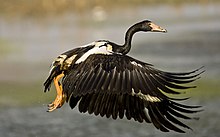
The Magpie Goose, Anseranas semipalmata, is a waterbird species found in coastal northern Australia and savannah in southern New Guinea. It is a unique member of the order Anseriformes, and arranged in a family and genus distinct from all other living waterfowl. The Magpie Goose is a resident breeder in northern Australia and in southern New Guinea.
Magpie-geese are unmistakable birds with their black and white plumage and yellowish legs. The feet are only partially webbed, although the Magpie Goose will feed on vegetable matter in the water as well as on land. Males are larger than females. Unlike true geese, the moult is gradual, and there is no flightless period. The voice is a loud honking.
Description
The Magpie Goose has a black neck and head, with a characteristic knob on the crown (larger in males), which increases in size with age. The underparts are white, with contrasting black edges on the underwing. The bill, legs and feet are orange. The Magpie Goose differs from most waterfowl in having strongly clawed toes that are webbed only on their basal halves (i.e. only partly webbed). Females are slightly smaller than males.

Where does it live?

Distribution
The Magpie Goose is widespread throughout coastal northern and eastern Australia. It can be seen from Fitzroy River, Western Australia, through northern Australia to Rockhampton, Queensland, and has been extending its range into coastal New South Wales to the Clarence River and further south.
Habitat
The Magpie Goose is seen in floodplains and wet grasslands. Some individuals, mostly younger birds, may be seen at quite long distances inland.

What does it do?

Feeding
Large, noisy flocks of up to a few thousand birds congregate to feed on aquatic vegetation. The Magpie Goose is a specialized feeder with wild rice, Oryza, Paspalum, Panicum and spike-rush, Eleocharis, forming the bulk of its diet.
Breeding
During the breeding season, Magpie Geese build nests in secluded places, usually close to wetlands. The nest is almost single-handedly constructed by the male. It usually consists of a simple unlined cup placed either in a floating platform of trampled reeds or built in tree-tops. Pairs of geese mate for life, but a male may have two females. Two females may occasionally use the same nest to lay the large, oval, off-white coloured eggs. All adults share incubation and care for the young.
http://birdsinbackyards.net/species/Anseranas-semipalmata

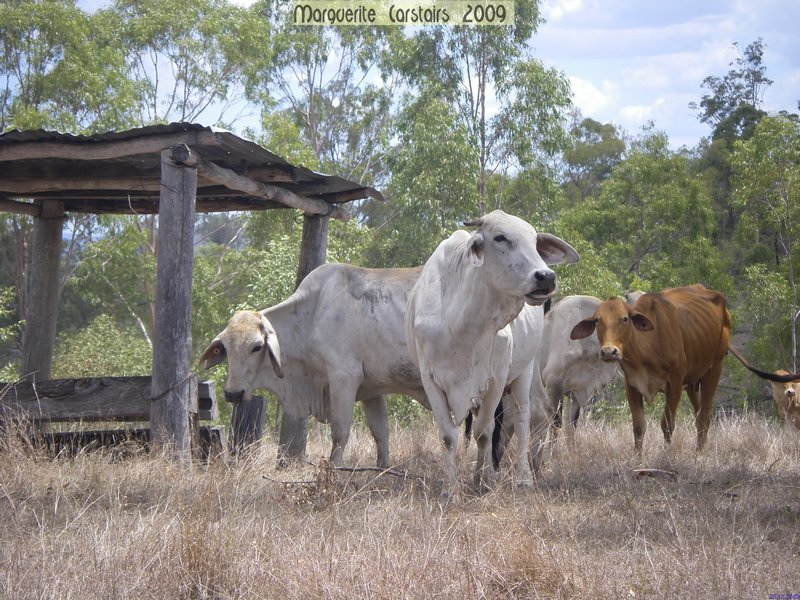
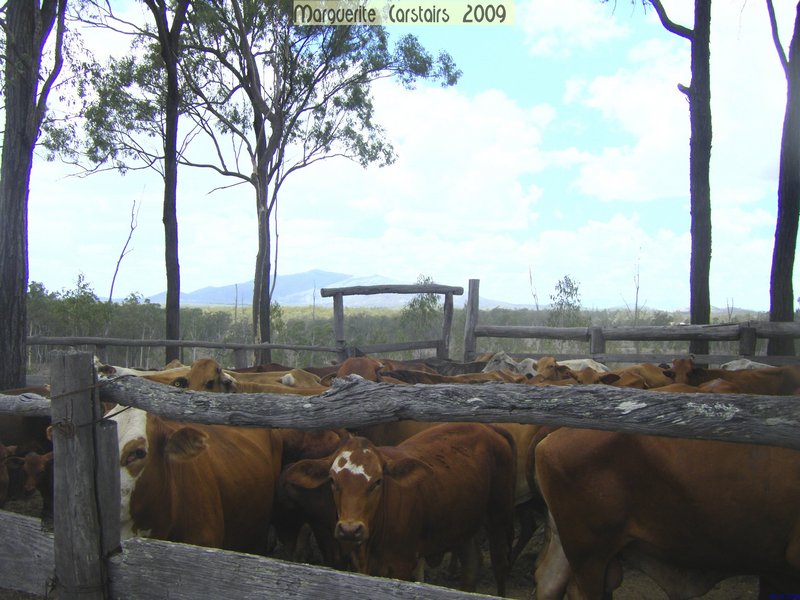
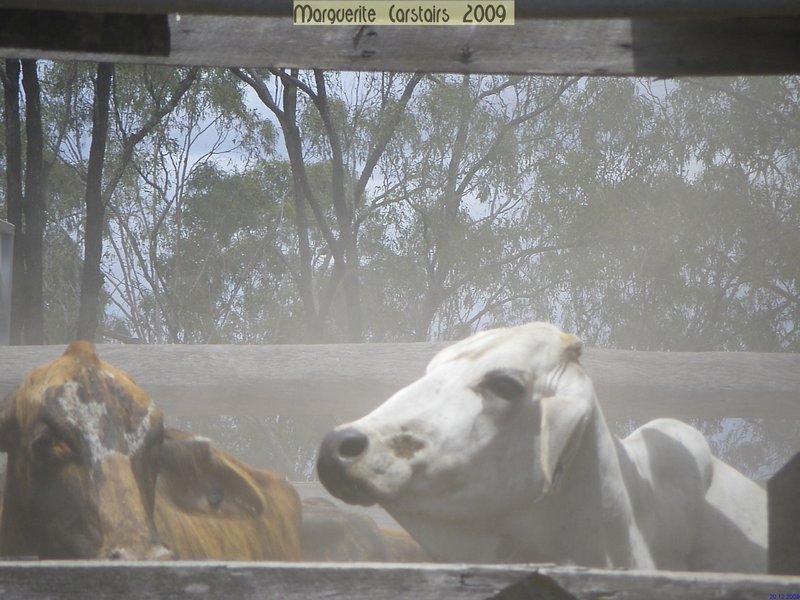
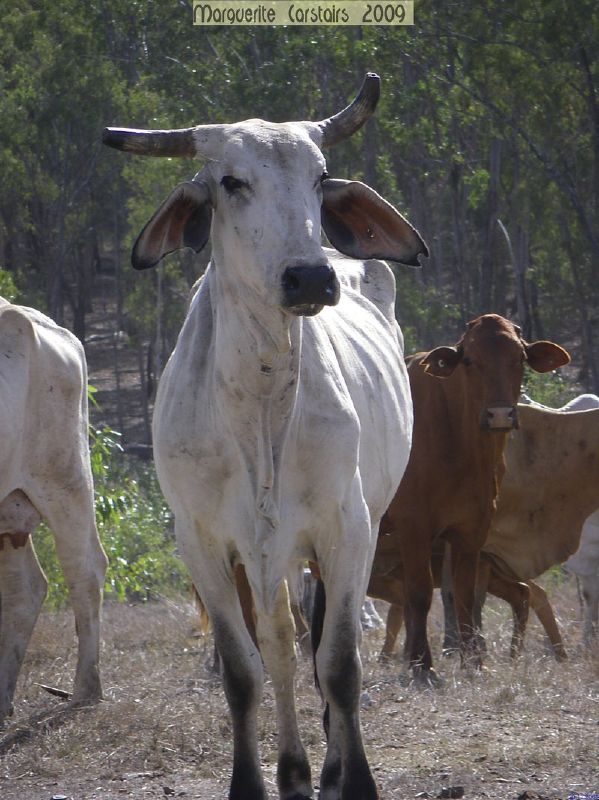
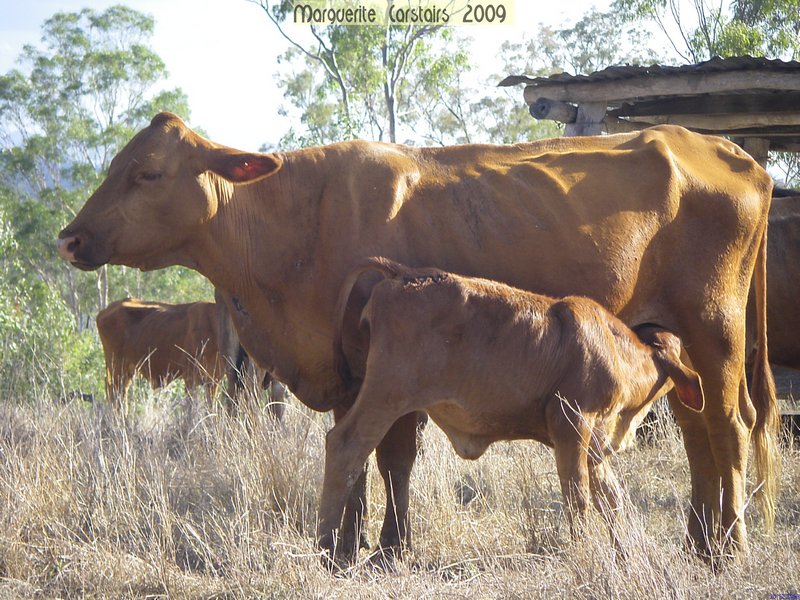
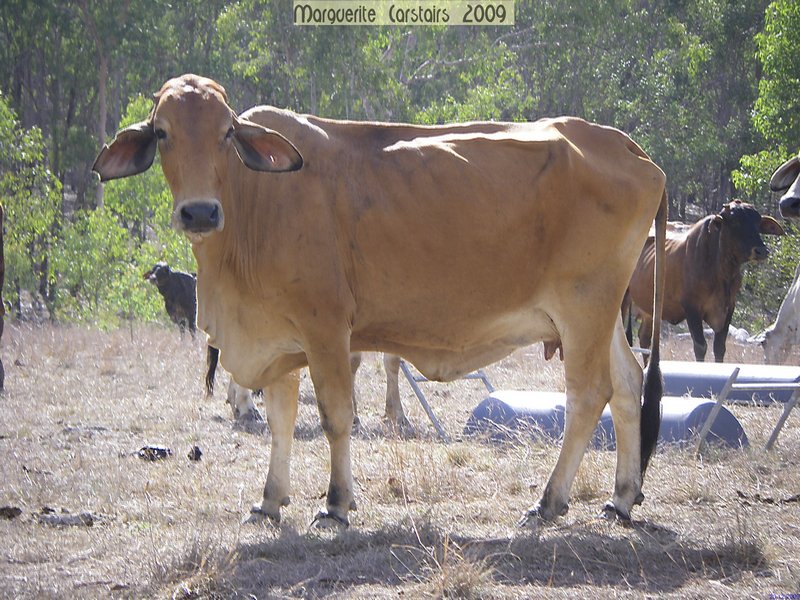
Brahman Cattle at Double Lagoon Normanton

The Brahman breed originated from Bos indicus cattle originally brought from India. Through centuries of exposure to inadequate food supplies, insect pests, parasites, diseases and the weather extremes of tropical India, the native cattle developed some remarkable adaptations for survival. These are the "sacred cattle of India," and many of the Hindu faith will not eat meat from them, will not permit them to be slaughtered, and will not sell them. These facts, in conjunction with he quarantine regulations of the United States, have made it difficult to import cattle from India into this country.
All the Bos indicus cattle are characterized by a large hump over the top of the shoulder and neck. Spinal processes below the hump are extended, and there is considerable muscular tissue covering the processes. The other characteristics of these cattle are their horns, which usually curve upward and are sometimes tilted to the rear, their ears, which are generally large and pendulous, and the throatlatch and dewlap, which have a large amount of excess skin. They also have more highly developed sweat glands than European cattle (Bos taurus) and so can perspire more freely. Bos indicus cattle produce an oily secretion from the sebaceous glands which has a distinctive odor and is reported to assist in repelling insects.

Origin of the Breed

Some 30 well defined breeds of cattle have been listed in India. Three principal strains or varieties were brought to the United States and used in the development of the Brahman breed are the Guzerat, the Nellore, and Gir. In addition, the Krishna Valley strain was introduced and used to a lesser extent. The general similarity of the Guzert strain to the cattle selected and developed in this country would indicate that cattlemen working with the breed have generally preferred this type.

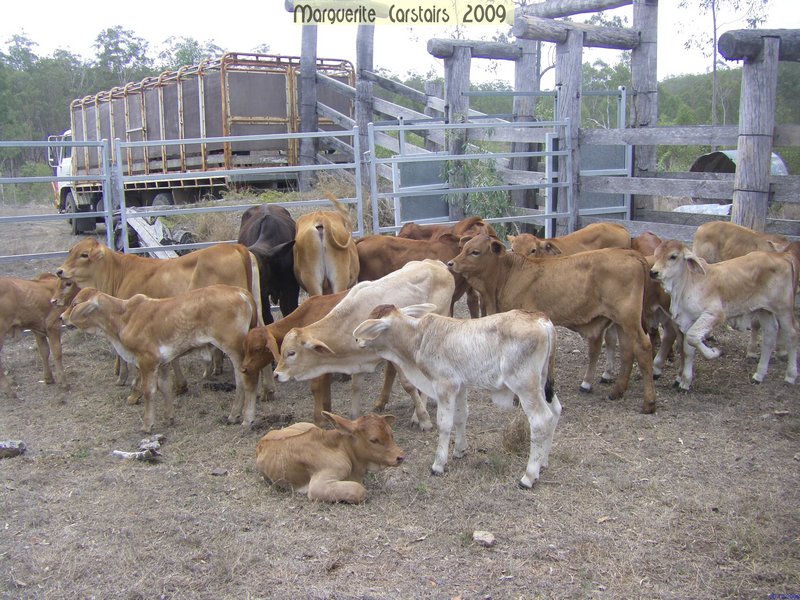
 Here at the muster, the weiners have been separated and are in the yards ready to be returned to the paddocks until the next muster

Tuesday, June 1, 2010

Working at a Cattle Station at Normanton Queensland Australia


Working at a cattle Station

31 May 2010
Trip took 3 days..first night at Camilalla Beach, then 45 kms past Bowen and then Ravenshoe and here...2,012 kms distance traveled.
Was very exciting. Loved the trip and found the roads and weather excellent. The Toyota drove well..was wonderful trip.

Love the property. Its right next to a lagoon and very green and very beautiful. Will do photos next week. I can use the internet weekly so will prepare for it. Its a very beautiful part of the world, many birds and trees and beautiful colors. Love the people I am working for..Bill and Maxine and the team love my cooking. I shall never want to leave here I can see.

So far done nothing but cook. Today the muster started. It is done with a helicopter who finds the cattle and directs the team to collect them and take them to the fenced areas for all they do to them. Then it takes 5 days for this lot to be done, and then the helicopter comes for the next part. I will know more as I see it happening. I hope to be poking around the sheds with a camera and get some photos...want one of the cattle being led in, dust around, as they come towards the shed.

They killed a hige beast for meat, and I have mince and steaks and huge roasts to prepare. The guys will eat 2 Porterhouse a meal. I am amazed. I have never seen so much meat before. Last night I cooked  salted meat for lunch today. They make their own salt beef here and its delicious. Cooked in in a crock pot overnight.
Today I will make a huge roast fort tomorrows lunch, and have steaks for dinner when they return. They have taken a cut lunch...sandwiches, cake, scones and fruit. They eat very well here. I am sure I will be fat in 2 months with all this good cooking, and eating, I am doing here.

This is this weeks adventure...today the muster has started, and soon the yards will be full of brahmin and motor bikes, and action.

1 June 2010


Yesterday the muster started. A helicopter locates the cattle, and then they are driven down to the house yards.
Today they will dip them and inject them after sorting them into weiners, calves, pregnant and fat. This property is a breeding property where they breed Brahmin cattle.
The property is one of a few properties. Others fatten for the overseas market. The meat from here goes overseas. It is of a very high quality. The meat that was killed for the kitchen has so far been a flap roast, salted meat and an irish stew, and the food is delicious as the quality of the meat, and vegetables here, is very high.
On the way at Milla Milla I saw a tea plantation and bought some local tea which has a wonderful flavor. The countryside between Innidfail and Ravenhoe is all very mountainous. That is where the tea grows. I also took photos of a Wind farm. Ravenshoe claims to be Australia's highest town.
It was scary driving up these steep inclines in the first and second gear. The views were spectacular but as the driver, I was more concerned with getting the van up the hill and over.

Today the team are giving the 600 cattle in the yard injections and the dip. They will work these cattle for about 5 days and then the helicopter will return for the next muster. I hope to get some aerial shots if I get lucky.

http://www.smh.com.au/news/Queensland/Normanton/2005/02/17/1108500203650.html

http://maps.google.com.au/maps/place?hl=en&um=1&ie=UTF-8&q=normanton+queensland+australia&fb=1&gl=au&ftid=0x698a760aaeb881cb:0x8725f05ef6eaf3d9&ei=Pi0ETNqzEIvRccz42akK&sa=X&oi=geocode_result&ct=title&resnum=1&ved=0CBgQ8gEwAA

Saturday, May 22, 2010

Sarah is running around Australia

Sarahs Journal

Sarahs Journal

Cairns

Cairns welcomed us with a fantastic stay at Coconut Palms BIG 4 Resort. The kids have had a chance to play with other holiday makers, relax and rest up ahead of the journey accross the Savannah Way towards Darwin. We were able to take the kids on the Sky Rail and Kuranda Scenic Rail. I really enjoyed sharing thier delight at the sights but alas, reality soon caught up and it was back on with the running shoes to face the hills to Kuranda on foot. The strecth to Mareeba was a welcome contrasting plateau. Atherton was next.

Townsville

Another humid 60km under the belt. Channel 7 and Win tv interviews done, it was time to hit the beach here in Townsville and let the kids play in the gentle surf. Woodlands BIG 4 Caravan Park let us stay for 2 nights. The support vehilcle shuttled a tired me back to there after the days running. Lack of road shoulders meant that the support car would let me run ahead for about 2 km, then catch me up, offering a drink of water before letting me run ahead again. I had to step off the road as 3 wide load trucks went by with demountables on them.... getting desperate for entertainment up here!!!

Day 29: Rockhampton

29-3

Rockhampton was full of friendly people. Robby from Ascot Stone Grill invited us all to a scrumptious meal at Ascot Backpackers, good hot showers all round were welcome. Then things started to go wrong mechanically, luckilly right in Rockhampton itself. Toyota took the car in for a quick new clutch. Thank goodness for warentee!

Day 24 Bundaberg

the park

At last, nice flat terain, nice big town, Beaurepaires put 6 NEW wheels on the bus, THANKYOU!!!

Also a Huge thankyou to The COSY CORNER INTERNET CAFE who stayed open til nearly midnight so Kadi could update the website. I spoke on the radio later the next day after another flat 30km north out of Bundaberg.

Lovely seafood and farm fresh produce along the way... all makes for happy running. We were invited to a farm out near 1770 by a motorist who stopped to talk to us at a fuel station. We took a detour during the day. I soon forgot about my tiredness and enjoyed the short day break out to the beach at 1770, Agnes Water and their farm. Ajay and Susie made us feel at home, letting us camp up for the night and showed us around their property. They taught us some natural tie-dying methods form plant based dies around their farm. The team helped out Ajay that afternoon with some fencing in return for their lovely hospitality. We had roast pig for dinner, the whole pig, which was recently slaughtered rotated on a spit as we sat around the campfire and relaxed

Thursday, April 1, 2010

Cloncurry Queensland Australia

Cloncurry is an Outback town developed by the Mine Xstrada

Photos by Maggi Carstairs 2009
http://Travel-maggi.blogspot.com


Tuesday, March 30, 2010

Cloncurry Queensland

Outback Town of Cloncurry


Cloncurry is a town situated in north west Queensland, Australia, 770 kilometres west of the city of Townsville via the Flinders Highway. The town lies adjacent to the Cloncurry River. It is the administrative centre of the Cloncurry Shire. At the 2006 census, the town had a population of 2,384.[1] Cloncurry was proclaimed a town in 1884, and the railway arrived in 1908. Until the advent of Mount Isa, the town was the largest settlement in north west Queensland.
The first Europeans to traverse the area were Burke and Wills on their epic, and ultimately fatal, transcontinental expedition. The Cloncurry River was named by Burke after Lady Elizabeth Cloncurry, his cousin, with the town eventually taking its name from the river.
Copper was discovered in the area in 1867, and the town sprang up to service the Great Australia Mine to the south. Cattle grazing is the significant industry in the region, and a large saleyards is located in the town.
The first ever flight of the Royal Flying Doctor Service of Australia took place from Cloncurry on May 15, 1928, using a de Havilland DH.50 aircraft hired from the then small airline, Qantas. A Royal Flying Doctor Service museum is situated in the town.


Sunset at Chinaman Creek Dam, Cloncurry
Cloncurry was widely regarded as holding the record for the highest temperature recorded in Australia at 127.5 °F (53.1 °C) on 16 January 1889.
http://M-carstairs.com/travel

Monday, January 4, 2010

A Mile of Machines at Ilfracombe Queensland


http://www.ebrochures.com/ebrochures/eBooks/Travel/A_Mile_of_Machines


Ilfracombe Machinery and Heritage Museum
The Museum, situated on the northern side of the main road, provides an insight into this past with its displays of an old police lock-up used between 1901 and 1974, a meat house, the old manual post office exchange, a machinery shed with steam engines, tractors, pumps, graders, trucks, drays, buggies, a 100-million year-old petrified palm, curious natural limestone rocks with a remarkably rounded form, along with other interesting artefacts and memorabilia. One of the old wagons possessed by the museum was once in local use. It was drawn by 20 or 30 horses and carted about 100 bales of wool (weighing 15 to 20 tons) to sea ports such as Bowen or Rockhampton: a six-month return journey.
Also on-site is 'Oakhampton', a cottage which was once part of the 'Lyndon' estate. It is considered typical of a station hand's married quarters and was common enough on rural stations until after World War II. It now sells souvenirs and crafts, The museum has been built in the style of an old station homestead. It is open permanently with no entry charge.


Ilfracombe
Tiny western Queensland township surrounded by large grazing properties.
Looking at the tiny settlement of Ilfracombe, with its one hotel and rather isolated Folk Museum, it is hard to imagine that, in the 1890s, the town had three hotels each with its own dance hall, a soft drink maker, a coach builder, two general stores, a billiard saloon, a dressmaker, three commission agents, a couple of butchers, a baker and a saddler. The story of western Queensland is contained in these changes. Once transportation became efficient the number of people living in the outback declined. What took a month in the 1890s can now take only a few hours.
Today there are just 350 people living in a shire which covers an area of 6500 sq. km. The old stations where anything up to 100 people were employed are now a thing of the past. Back in1892 Wellshot Station (60 km south of town) was the largest sheep station in the world, in terms of the number of sheep it ran: 460 000. Indeed, so predominant was it that Ilfracombe was, until 1890, known as Wellshot.

Sunday, December 20, 2009

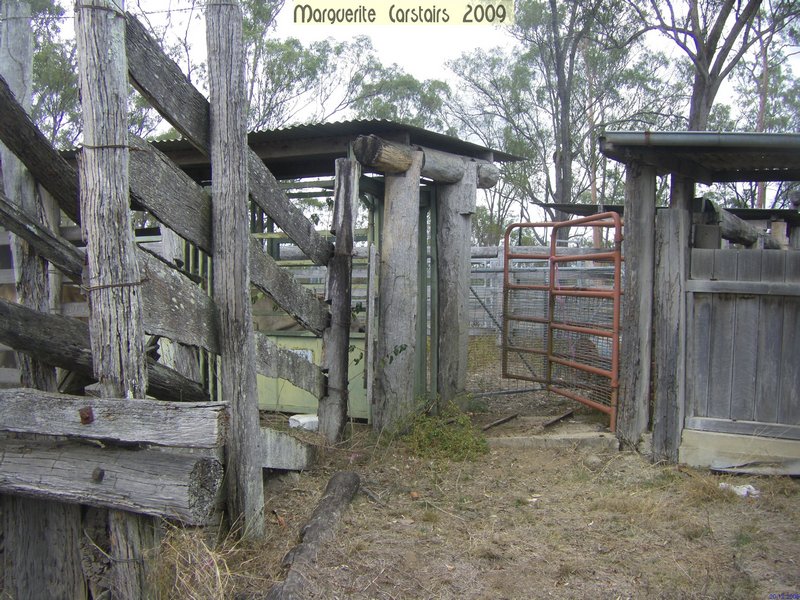
Cattle Yard


Calves in the Holding Pens


The calves are separated from the Mothers for treatment.They get branded, deballed if male, dehorned, and injected.
They are not happy away from their mothers.
Some are very young, others re as old as 8 months.
They wait patiently huddled together in the holding yard.


Aussie Style Barbecue


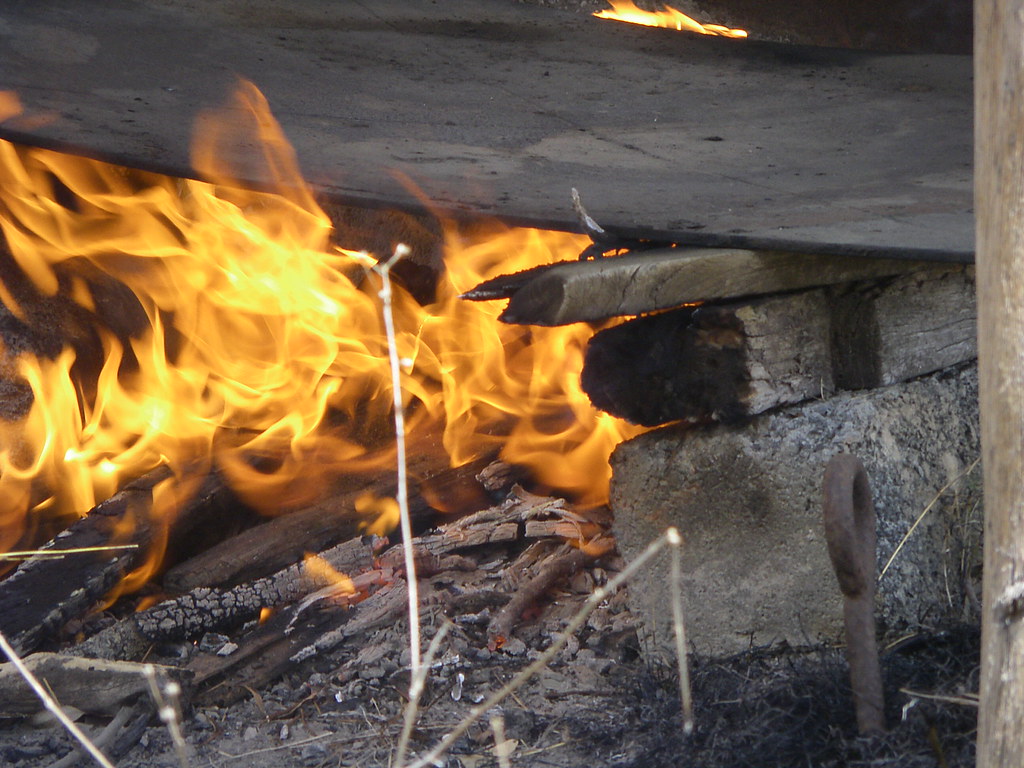
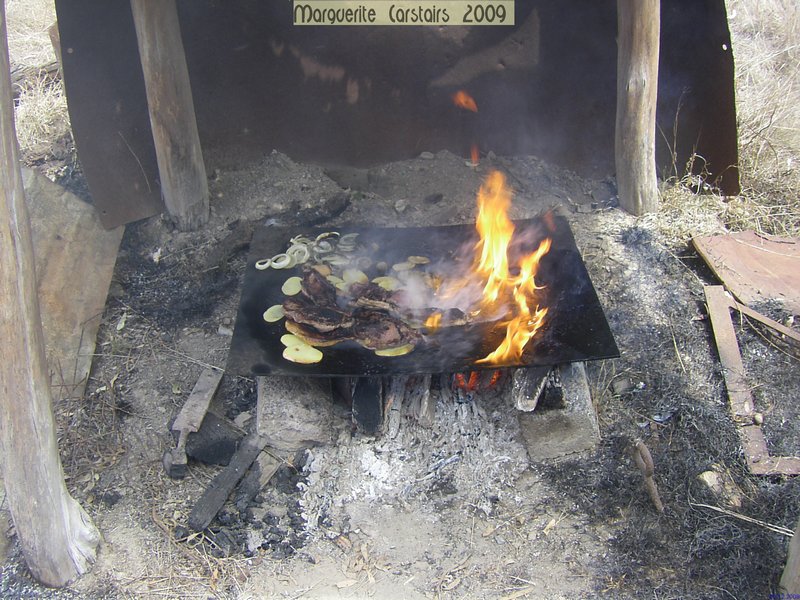
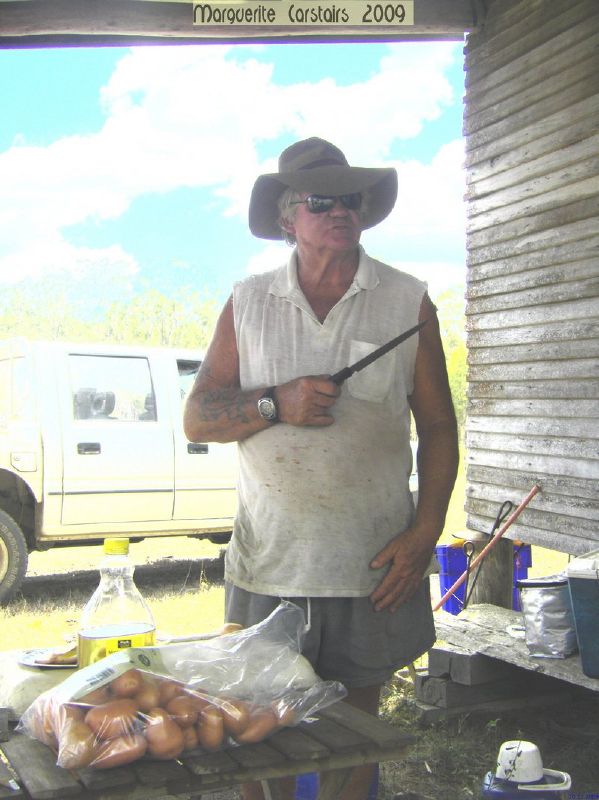
The barbecue was a sheet of iron over bricks, here housed under tin.
In this case, the sheet was propped up with wood, which also burnt.

Twigs and wood are arranged in the fireplace and lit using grass.
The day was hot, and everything around was bone dry so the fire caught easily, and soon was roaring merrilly away. Sliced onions were cooked first.
It fascinates me how the Aussie barbecue always starts with the onions, which take less time than the meat to cook, and always end up totally burnt. They should be cooked, then removed to a dish until needed. They are always left on the sides and get burnt.

When I barbecue, I cook the meat first, then add the onions around the meat, absorbing the meat flavors.
I also wrap the potatoes in foil and place them in the coals to cook.

Here, everything was drenched generously with oil,  the food caught alight, and everything went black.

It did start as beautiful local Rump steaks, with white onions and Red skinned potatoes.


Outback Barbecue

It was very hot and dusty.
The Chef was very efficient in preparing the fire and setting everything up.
It started looking great....but when he poured oil over the onions and potatoes, the result was fiery.
Flames went everywhere.

This, the final presentation was eaten by the hungry workers.

I promised them that if ever I was invited to photograph a muster again, I would cook their lunch.


The Barbecue Expert

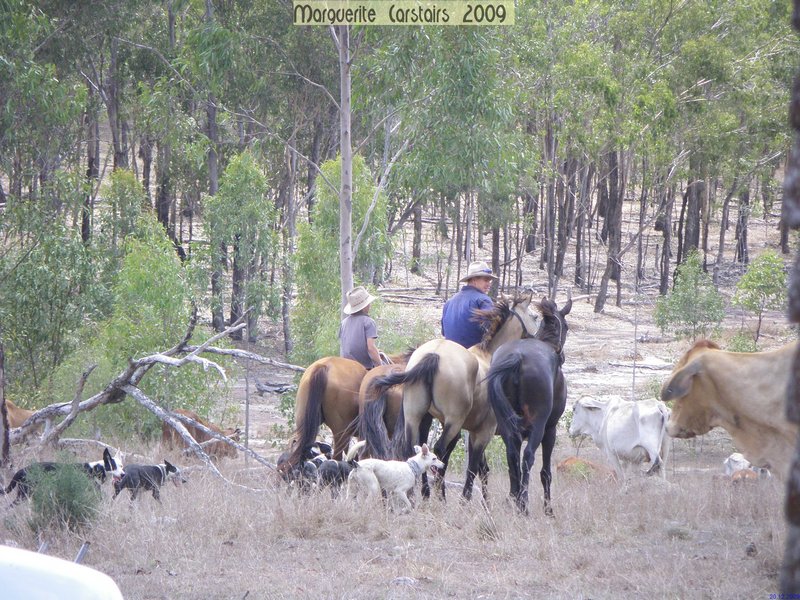
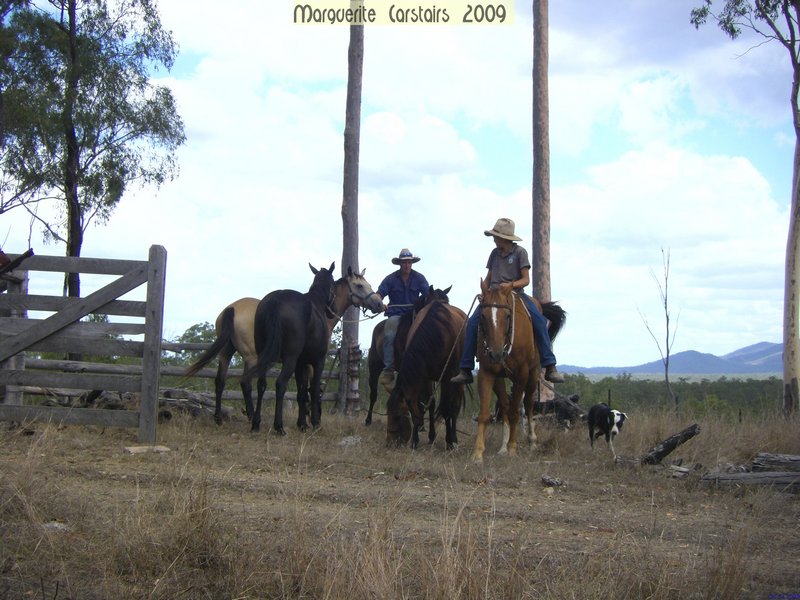
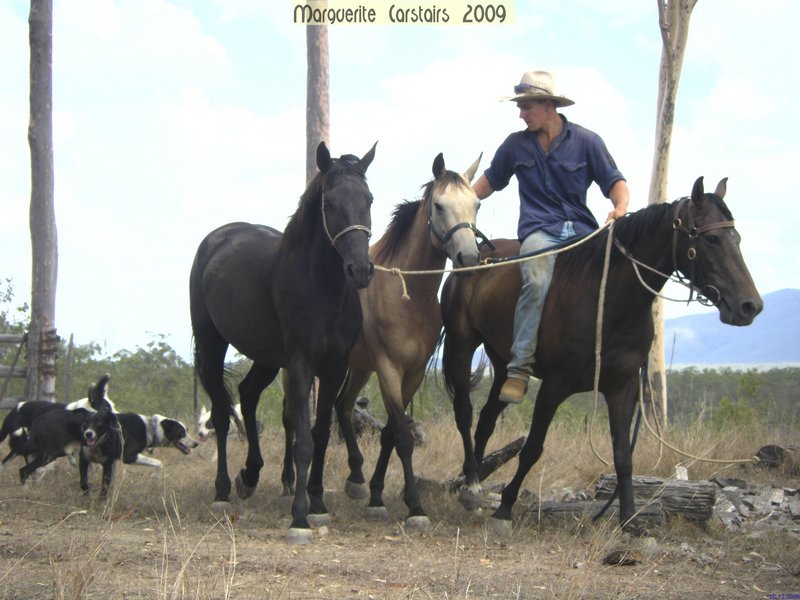
Muster Team Going to start the Round up


Cattle in the Holding Yard


The Cattle wander 3,500 acres and at Muster Time, three times a year, are rounded up by the team and kept in Holding yards, until processed.

The Brahman (named for the sacred cow of Hinduism) or Brahma is a breed of Zebu cattle (Bos primigenius indicus), later exported from India to the rest of the world. The main breed was the Kankrej, called Guzerat in Brazil. Also used were the Nelore or Ongole and the Gir or Gyr.

Brahman are ideally suited to Australian conditions.


Brahman Cattle


The American Brahman has a distinct large hump over the top of the shoulder and neck, and a loose flap of skin (dewlap) hanging from the neck. Their ears are larger than Bos taurus breeds. Bulls weigh 1,600 to 2,200 pounds (800 to 1,100 kg) and cows weigh 1,000 to 1,400 pounds (500 to 700 kg). At birth, calves weigh 60 to 65 pounds (30 to 33 kg). American Brahmans are known as a docile, intelligent breed of beef cattle. Brahman cattle can be gray or red color. Their tail switch is black, and they have black pigmentation on their noses, tips of ears, and hooves. They are primarily a horned breed of cattle however there are some bloodlines of Brahman that are naturally polled (without horns).

Brahmans have a greater ability to withstand heat than European cattle. They have more sweat glands, and also an oily skin, thought to help repel pest insects along with a smooth coat. They have a short hair coat. They are also more resistant to parasites and disease. Brahmans have also been extensively crossbred with European cattle in subtropical United States, in Central America and in some tropical areas of the world to gain their advantages in hot climates. Brahman crossed cattle, referred to as F-1 Brahmans, are very popular in the southern 1/3 of the United States and in South America, Asia, and Australia because of the sub-tropical climate. An F-1 Brahman can be a cross between any two unrelated breeds, however it is most popular when crossed with Hereford and Angus.

A Brahman cow is an extremely good mother, offering protection and an abundance of milk for her calves. Brahman calves tend to measure high weights at weaning because of the outstanding milk given by Brahman cows. In some countries, especially South America, Brahman cattle are used for both milk and beef production.


Tuesday, October 20, 2009

Outback Art by Ladymaggic

Display of Ladymaggic Art at The Outback Art Show


Outback Art Show

This was the Art Show at Blackhall in 2005

All the Paintings by Maggi Carstairs are in Private Collections.

 Butterfly Dreaming..

Sapphire Mining at Gemfields Queensland


Sapphire Mining Queensland

Willows Gemfields is about a 45 minute drive west of Emerald along the Capricorn Highway. The Gemfields area is known for having unusually coloured sapphires. Fossicking in the Gemfields is easy with equipment hire available, you can even get your fossicking license in Anakie. Willows Gemfields has caravan park accommodation and also offers walk-in-mine tours and a fossicking park, where you can learn to recognise and find sapphires from the earth. Willows Gemfields service station only has unleaded fuel, and the nearest hospital in the Gemfields is located at Emerald.

http://m-carstairs.com/desertart/id15.html

Willows Gemfields is 11 kilometres off the Capricorn Highway. The turn is 24 kilometres pass the Anakie/Sapphire crossroads and about a 45 minute drive west of Emerald.

The willows Gemfields is a popular fossicking spot, as very little machinery, and no corporate mining, has been permitted in the past. 'The Willows' is known for having unusually coloured sapphires. Some of the world's most famous Sapphires have been found on the Willows Gemfields, including a 332 carat rough yellow, aptly named the 'golden Willow'.

Hand mining and/or fossicking involves digging from old creek beds, now underground, and sieving it to separate out the sand and oversized rocks. It is then washed before the sapphires can be hand sorted from the other heavy gravels.

Fossicking on the Sapphire Gemfields is easy with equipment hire and fossicking licenses available.

Willows Gemfields has caravan park accommodation and also offers fossicking park facilities, where you can learn to recognise and find sapphires from the earth. The Glenalva and Willows shallow digging areas are where you fossick near Willows Gemfields. Willows Gemfields service station only has unleaded fuel, and the nearest hospital to the Gemfields is located at Emerald.

Mt Whale Bone, Newman West Australia


Newman is 1186km north of Perth or 458km south of Port Hedland and is the largest town in the hospitable East Pilbara region of Australias North West. Built by Mount Newman Mining Company during 1967-69, and originally named Mount Newman town, it has evolved into a popular stopover destination for exploring the impressive beauty of Karijini National Park and the Hamersley Gorges.

Until the early 1960s the industry in the Pilbara was pastoral, apart from a brief stint as a potential but unsuccessful gold mining area.

In 1957, prospector Stan Hidditch discovered large iron-ore deposits within the Hamersley Ranges. During 1967-69, many facilities were constructed to facilitate the extraction of this vast stretch of iron-ore from the arid ground, including Newman Township. In addition, the worlds largest open-cut iron-ore mine was built at nearby Mount Whaleback as well as the largest privately owned railway that runs 426km from Newman to Port Headland on the coast. This huge operation also included enhancing the port facilities at Port Hedland. The mine is 85% owned by BHP Company and still runs today producing an amazing 30-million tonnes of iron ore each year.

Mining has endowed a rich heritage of infrastructure at Newman for the visitor to the town.

In 1975, over 60,000 trees and shrubs were planted around Newman to restore the landscape where in summer, it is not uncommon for temperatures in Australias North West to reach over 40C every day.

In 1981, responsibility for the town was relinquished to the local shire and the name was changed to simply oNewman. Since then, a number of tourist facilities have augmented Newmans position as an interesting and different destination for tourists exploring the surrounding areas or passing through the East Pilbara.

http://www.discoverwest.com.au/western_australia/newman.html

Saturday, October 17, 2009

Sapphire Mining at Gemfields Queensland

Sapphire Mining.

I spent a week searching sapphires at Gemfields and Emerald in the far North of Queensland in sweltering heat.
I found no sapphires, but I experienced a wonderful comradeship with the people who live and love this area.


Sapphire Mining Queensland

Broome to Perth by Motorvan

I drove 3,000 kms along Highway 1 from Broome to Perth.
It took 6 days of driving in over 50 degree heat in January...Australia's Hot Summer.


Outback Australia

Broome West Australia

Broome West Australia


Broome