Showing posts with label cattle. Show all posts

Friday, June 11, 2010

Brahman Cattle at Double Lagoon Normanton

The Brahman breed originated from Bos indicus cattle originally brought from India. Through centuries of exposure to inadequate food supplies, insect pests, parasites, diseases and the weather extremes of tropical India, the native cattle developed some remarkable adaptations for survival. These are the "sacred cattle of India," and many of the Hindu faith will not eat meat from them, will not permit them to be slaughtered, and will not sell them. These facts, in conjunction with he quarantine regulations of the United States, have made it difficult to import cattle from India into this country.
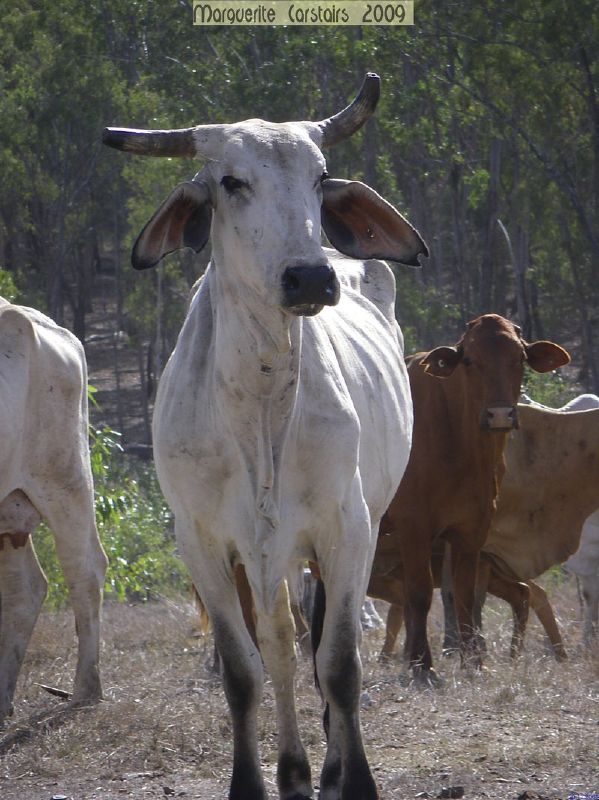
All the Bos indicus cattle are characterized by a large hump over the top of the shoulder and neck. Spinal processes below the hump are extended, and there is considerable muscular tissue covering the processes. The other characteristics of these cattle are their horns, which usually curve upward and are sometimes tilted to the rear, their ears, which are generally large and pendulous, and the throatlatch and dewlap, which have a large amount of excess skin. They also have more highly developed sweat glands than European cattle (Bos taurus) and so can perspire more freely. Bos indicus cattle produce an oily secretion from the sebaceous glands which has a distinctive odor and is reported to assist in repelling insects.

Origin of the Breed

Some 30 well defined breeds of cattle have been listed in India. Three principal strains or varieties were brought to the United States and used in the development of the Brahman breed are the Guzerat, the Nellore, and Gir. In addition, the Krishna Valley strain was introduced and used to a lesser extent. The general similarity of the Guzert strain to the cattle selected and developed in this country would indicate that cattlemen working with the breed have generally preferred this type.

 Here at the muster, the weiners have been separated and are in the yards ready to be returned to the paddocks until the next muster

Sunday, December 20, 2009

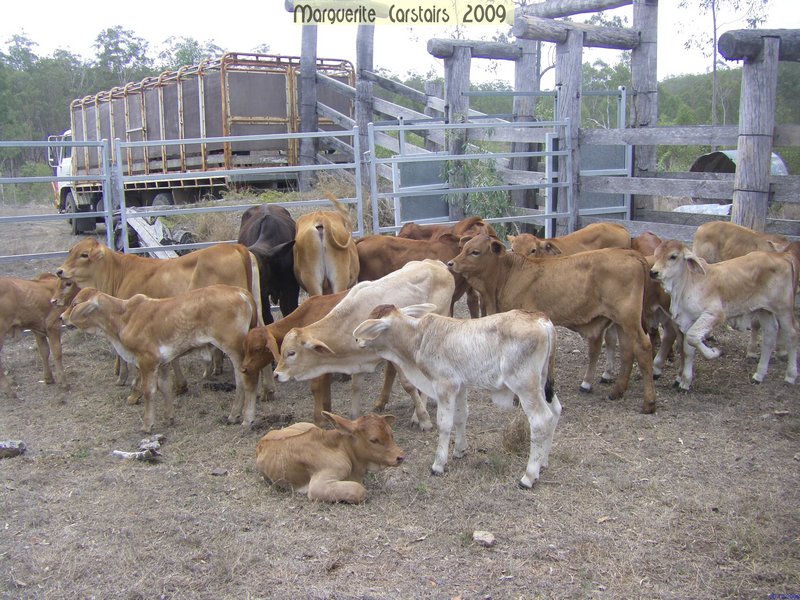
Calves in the Holding Pens


The calves are separated from the Mothers for treatment.They get branded, deballed if male, dehorned, and injected.
They are not happy away from their mothers.
Some are very young, others re as old as 8 months.
They wait patiently huddled together in the holding yard.


Brahman Cattle


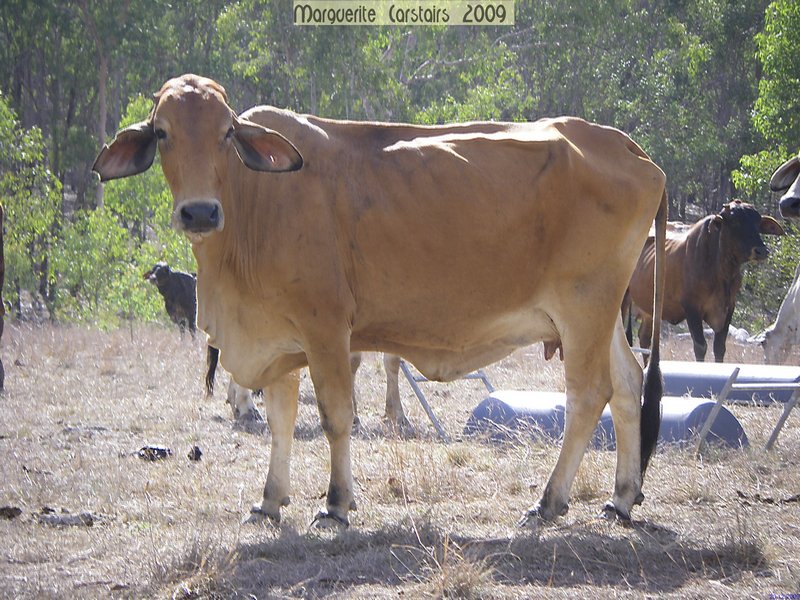
The American Brahman has a distinct large hump over the top of the shoulder and neck, and a loose flap of skin (dewlap) hanging from the neck. Their ears are larger than Bos taurus breeds. Bulls weigh 1,600 to 2,200 pounds (800 to 1,100 kg) and cows weigh 1,000 to 1,400 pounds (500 to 700 kg). At birth, calves weigh 60 to 65 pounds (30 to 33 kg). American Brahmans are known as a docile, intelligent breed of beef cattle. Brahman cattle can be gray or red color. Their tail switch is black, and they have black pigmentation on their noses, tips of ears, and hooves. They are primarily a horned breed of cattle however there are some bloodlines of Brahman that are naturally polled (without horns).

Brahmans have a greater ability to withstand heat than European cattle. They have more sweat glands, and also an oily skin, thought to help repel pest insects along with a smooth coat. They have a short hair coat. They are also more resistant to parasites and disease. Brahmans have also been extensively crossbred with European cattle in subtropical United States, in Central America and in some tropical areas of the world to gain their advantages in hot climates. Brahman crossed cattle, referred to as F-1 Brahmans, are very popular in the southern 1/3 of the United States and in South America, Asia, and Australia because of the sub-tropical climate. An F-1 Brahman can be a cross between any two unrelated breeds, however it is most popular when crossed with Hereford and Angus.

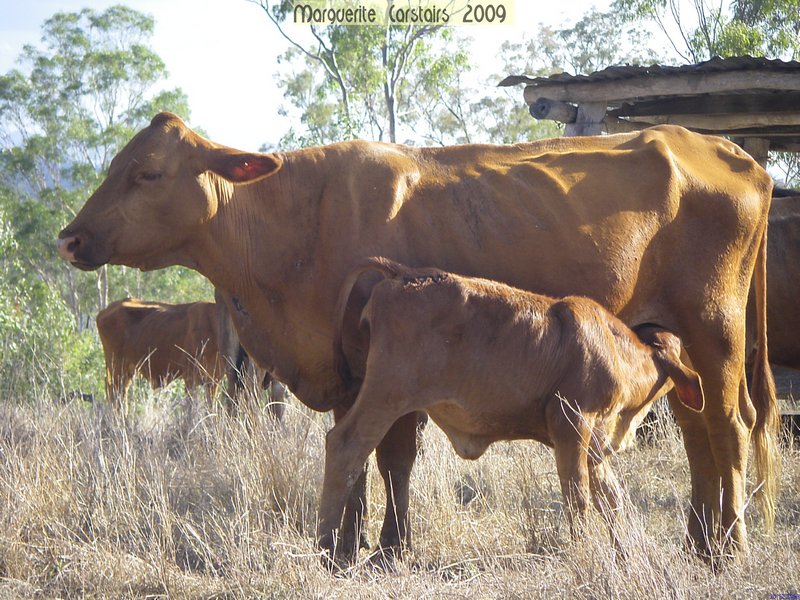
A Brahman cow is an extremely good mother, offering protection and an abundance of milk for her calves. Brahman calves tend to measure high weights at weaning because of the outstanding milk given by Brahman cows. In some countries, especially South America, Brahman cattle are used for both milk and beef production.