Cloncurry is an Outback town developed by the Mine Xstrada
Photos by Maggi Carstairs 2009
http://Travel-maggi.blogspot.com
Thursday, April 1, 2010


Tuesday, March 30, 2010
Cloncurry Queensland
Outback Town of Cloncurry


Cloncurry is a town situated in north west Queensland, Australia, 770 kilometres west of the city of Townsville via the Flinders Highway. The town lies adjacent to the Cloncurry River. It is the administrative centre of the Cloncurry Shire. At the 2006 census, the town had a population of 2,384.[1] Cloncurry was proclaimed a town in 1884, and the railway arrived in 1908. Until the advent of Mount Isa, the town was the largest settlement in north west Queensland.
The first Europeans to traverse the area were Burke and Wills on their epic, and ultimately fatal, transcontinental expedition. The Cloncurry River was named by Burke after Lady Elizabeth Cloncurry, his cousin, with the town eventually taking its name from the river.
Copper was discovered in the area in 1867, and the town sprang up to service the Great Australia Mine to the south. Cattle grazing is the significant industry in the region, and a large saleyards is located in the town.
The first ever flight of the Royal Flying Doctor Service of Australia took place from Cloncurry on May 15, 1928, using a de Havilland DH.50 aircraft hired from the then small airline, Qantas. A Royal Flying Doctor Service museum is situated in the town.

 Sunset at Chinaman Creek Dam, CloncurryCloncurry was widely regarded as holding the record for the highest temperature recorded in Australia at 127.5 °F (53.1 °C) on 16 January 1889.
http://M-carstairs.com/travel


Cloncurry is a town situated in north west Queensland, Australia, 770 kilometres west of the city of Townsville via the Flinders Highway. The town lies adjacent to the Cloncurry River. It is the administrative centre of the Cloncurry Shire. At the 2006 census, the town had a population of 2,384.[1] Cloncurry was proclaimed a town in 1884, and the railway arrived in 1908. Until the advent of Mount Isa, the town was the largest settlement in north west Queensland.
The first Europeans to traverse the area were Burke and Wills on their epic, and ultimately fatal, transcontinental expedition. The Cloncurry River was named by Burke after Lady Elizabeth Cloncurry, his cousin, with the town eventually taking its name from the river.
Copper was discovered in the area in 1867, and the town sprang up to service the Great Australia Mine to the south. Cattle grazing is the significant industry in the region, and a large saleyards is located in the town.
The first ever flight of the Royal Flying Doctor Service of Australia took place from Cloncurry on May 15, 1928, using a de Havilland DH.50 aircraft hired from the then small airline, Qantas. A Royal Flying Doctor Service museum is situated in the town.

http://M-carstairs.com/travel
Monday, January 4, 2010
A Mile of Machines at Ilfracombe Queensland
http://www.ebrochures.com/ebrochures/eBooks/Travel/A_Mile_of_Machines

Ilfracombe Machinery and Heritage Museum
The Museum, situated on the northern side of the main road, provides an insight into this past with its displays of an old police lock-up used between 1901 and 1974, a meat house, the old manual post office exchange, a machinery shed with steam engines, tractors, pumps, graders, trucks, drays, buggies, a 100-million year-old petrified palm, curious natural limestone rocks with a remarkably rounded form, along with other interesting artefacts and memorabilia. One of the old wagons possessed by the museum was once in local use. It was drawn by 20 or 30 horses and carted about 100 bales of wool (weighing 15 to 20 tons) to sea ports such as Bowen or Rockhampton: a six-month return journey.
Also on-site is 'Oakhampton', a cottage which was once part of the 'Lyndon' estate. It is considered typical of a station hand's married quarters and was common enough on rural stations until after World War II. It now sells souvenirs and crafts, The museum has been built in the style of an old station homestead. It is open permanently with no entry charge.
Ilfracombe
Tiny western Queensland township surrounded by large grazing properties.
Looking at the tiny settlement of Ilfracombe, with its one hotel and rather isolated Folk Museum, it is hard to imagine that, in the 1890s, the town had three hotels each with its own dance hall, a soft drink maker, a coach builder, two general stores, a billiard saloon, a dressmaker, three commission agents, a couple of butchers, a baker and a saddler. The story of western Queensland is contained in these changes. Once transportation became efficient the number of people living in the outback declined. What took a month in the 1890s can now take only a few hours.
Today there are just 350 people living in a shire which covers an area of 6500 sq. km. The old stations where anything up to 100 people were employed are now a thing of the past. Back in1892 Wellshot Station (60 km south of town) was the largest sheep station in the world, in terms of the number of sheep it ran: 460 000. Indeed, so predominant was it that Ilfracombe was, until 1890, known as Wellshot.
Sunday, December 20, 2009
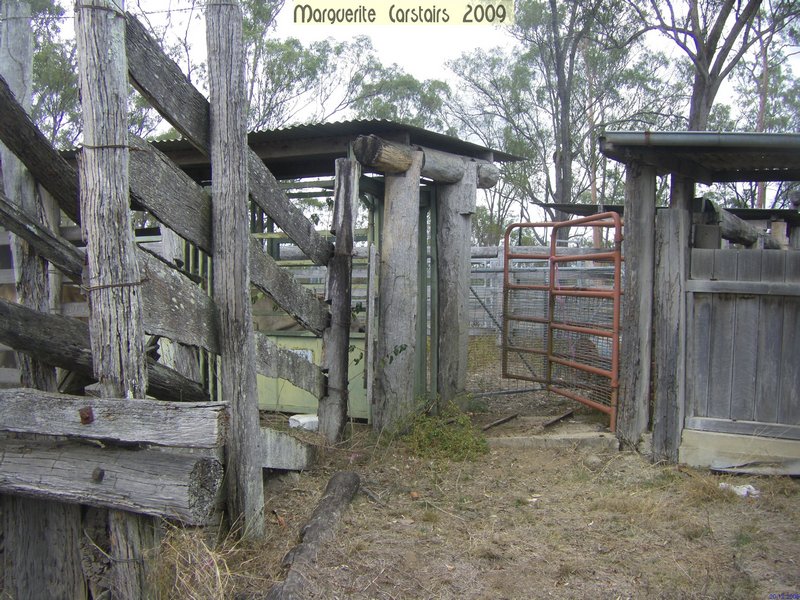
Calves in the Holding Pens
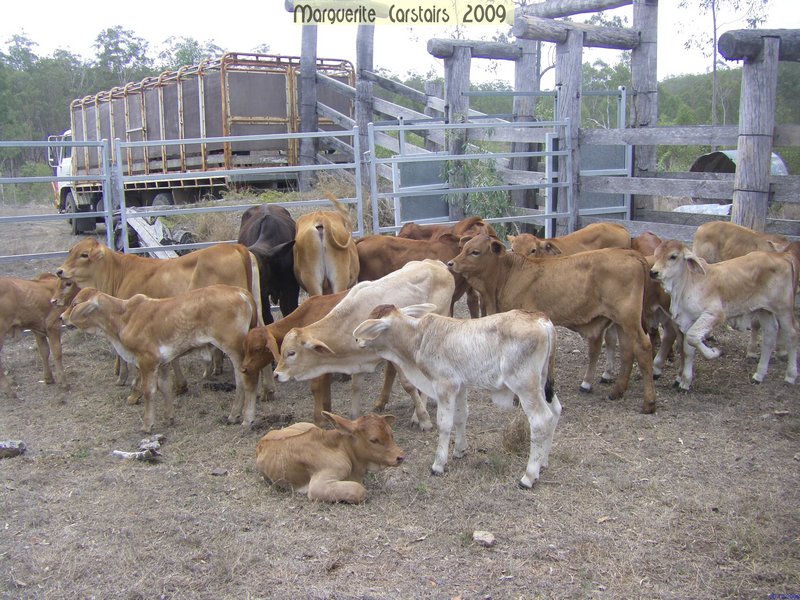
The calves are separated from the Mothers for treatment.They get branded, deballed if male, dehorned, and injected.
They are not happy away from their mothers.
Some are very young, others re as old as 8 months.
They wait patiently huddled together in the holding yard.


Aussie Style Barbecue
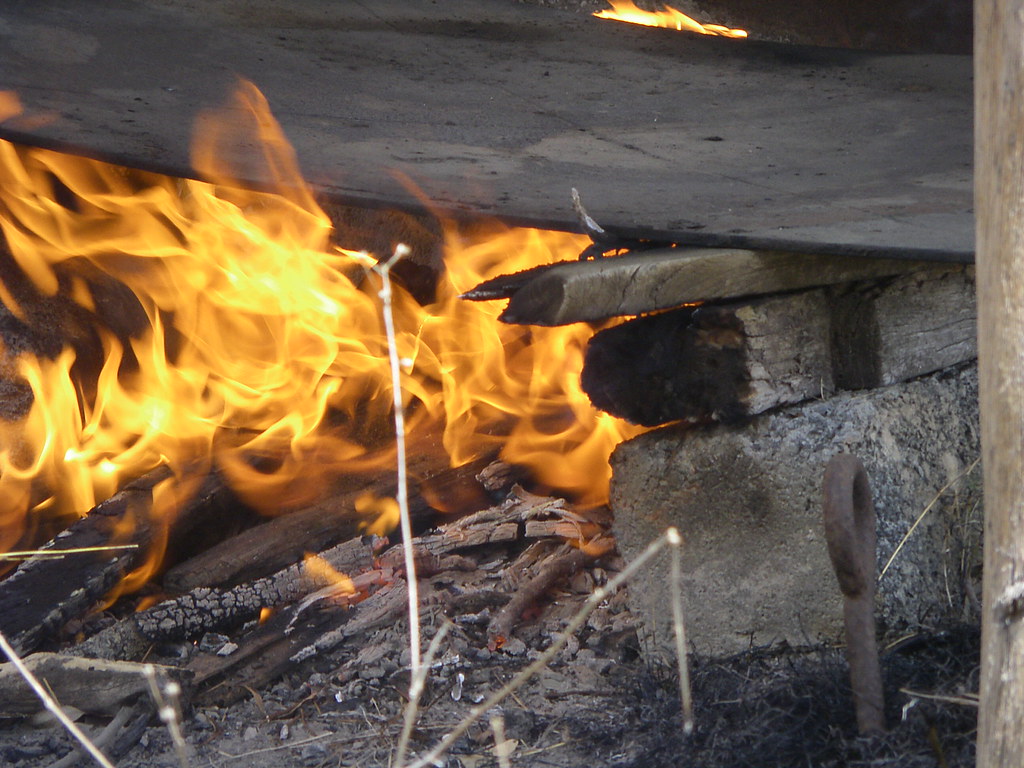
The barbecue was a sheet of iron over bricks, here housed under tin.
In this case, the sheet was propped up with wood, which also burnt.
Twigs and wood are arranged in the fireplace and lit using grass.
The day was hot, and everything around was bone dry so the fire caught easily, and soon was roaring merrilly away. Sliced onions were cooked first.
It fascinates me how the Aussie barbecue always starts with the onions, which take less time than the meat to cook, and always end up totally burnt. They should be cooked, then removed to a dish until needed. They are always left on the sides and get burnt.
When I barbecue, I cook the meat first, then add the onions around the meat, absorbing the meat flavors.
I also wrap the potatoes in foil and place them in the coals to cook.
Here, everything was drenched generously with oil, the food caught alight, and everything went black.
It did start as beautiful local Rump steaks, with white onions and Red skinned potatoes.
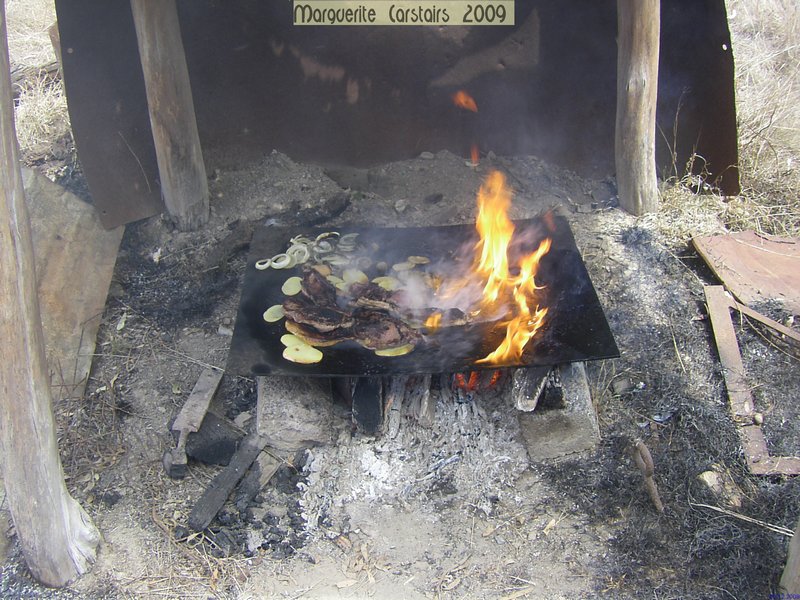
Outback Barbecue
It was very hot and dusty.
The Chef was very efficient in preparing the fire and setting everything up.
It started looking great....but when he poured oil over the onions and potatoes, the result was fiery.
Flames went everywhere.
This, the final presentation was eaten by the hungry workers.
I promised them that if ever I was invited to photograph a muster again, I would cook their lunch.


The Chef was very efficient in preparing the fire and setting everything up.
It started looking great....but when he poured oil over the onions and potatoes, the result was fiery.
Flames went everywhere.
This, the final presentation was eaten by the hungry workers.
I promised them that if ever I was invited to photograph a muster again, I would cook their lunch.


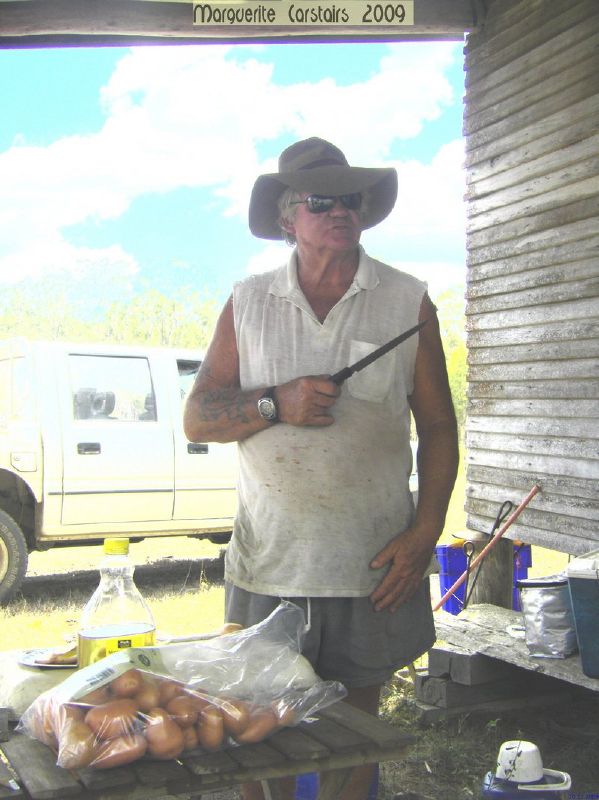
The Barbecue Expert
Subscribe to:
Posts (Atom)


140x45.jpg)

 Posts
Posts

